
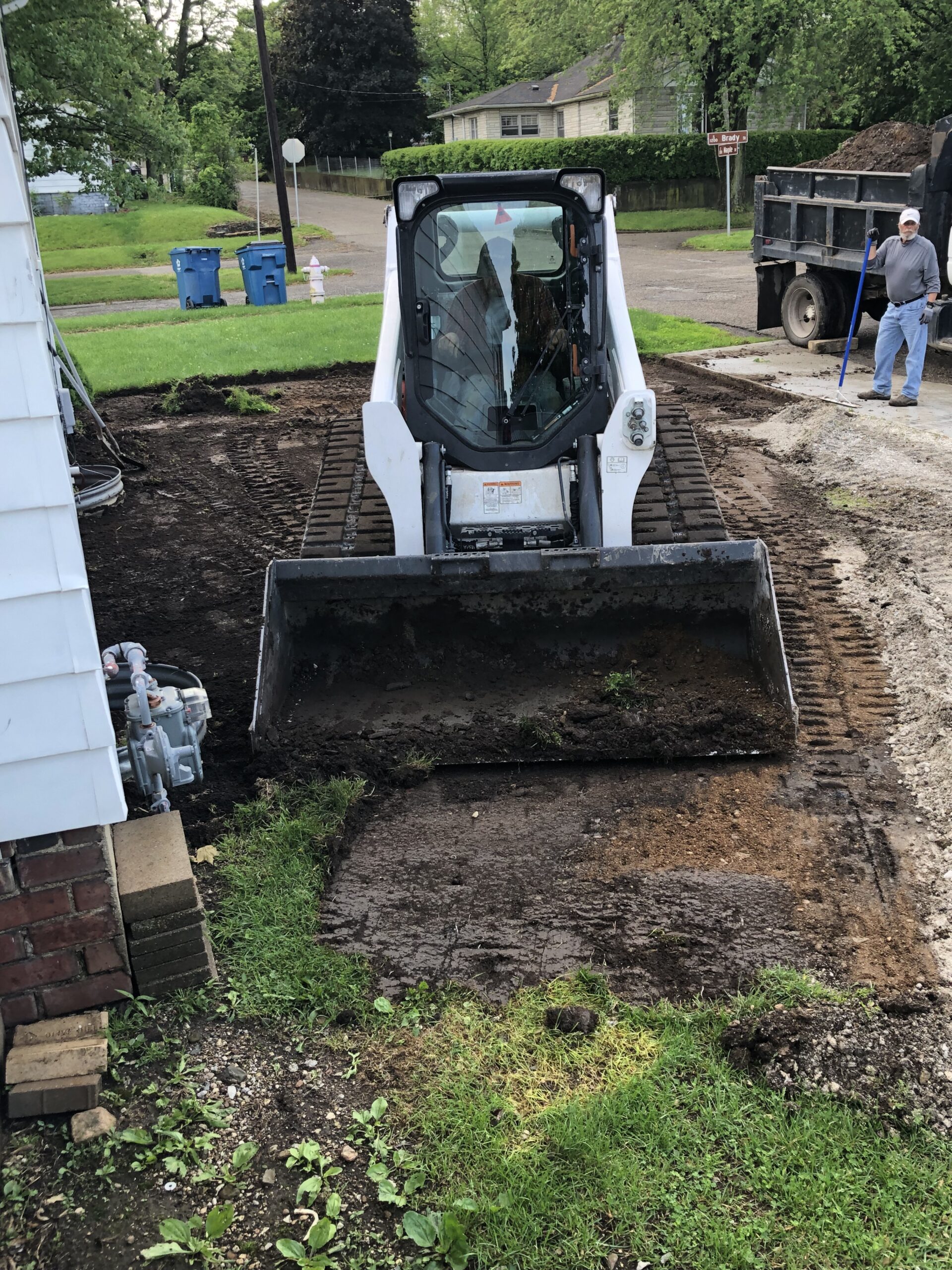

Homeowners and small-business owners across Attica, IN rely on Dirt Work Specialists to turn uneven, soggy, or overgrown ground into stable, build‑ready sites. Whether you’re planning a new garage slab, reshaping a backyard, adding parking, or fixing drainage, the right partner makes all the difference. With a process‑driven approach, local know‑how, and dependable equipment, Smart Contractors helps you protect budgets, timelines, and curb appeal—without surprises.
In this guide, you’ll learn what “dirt work” really includes, why professional site prep prevents rework, how to spot red flags on your property, and how to choose a contractor who stands behind their work in Attica and nearby communities. Let’s dive in…
→ Schedule Your Free Assessment Today!
Key Takeaways
-
Proper grading and compaction protect foundations, driveways, and landscaping.
-
Drainage design beats leaks, heaves, and muddy yards over the long term.
-
Use Dirt Work Specialists when water puddles or soil stays soft after storms.
-
Laser‑guided grading delivers the right slope the first time.
-
Match materials—fill, stone, topsoil—to purpose and budget.
-
Bundle tasks (clearing + grading + base) to reduce mobilization costs.
-
Prevent utility damage with 811 locates and a clear trenching plan.
-
Choose a partner who documents scope, soil conditions, and compaction targets.
What Dirt Work Means for Attica, IN Homes & Businesses
If you’re preparing a site in and around Attica, “dirt work” is the set of tasks that gets your ground to the correct elevation, density, and drainage so improvements last. It’s far more than moving soil; done right, it’s a planned sequence:
-
Site clearing and stripping. Brush, stumps, and organics are removed; topsoil is stripped and stockpiled so it doesn’t compromise structural layers.
-
Cut/fill and subgrade shaping. High spots are cut; low areas are filled and compacted in lifts to achieve design grade.
-
Compaction and proof‑rolling. Moisture is adjusted; vibratory compaction achieves density; heavy equipment “proof‑rolls” to reveal soft zones.
-
Drainage management. Swales, berms, and subsurface drains route water away from buildings and traffic areas.
-
Utility trenching and backfill. Water, sewer, electrical, and communications lines are trenched with correct bedding, cover, and warning tape.
-
Base installation. Granular base for concrete pads, patios, and drives is installed to thickness and grade tolerance.
-
Finish grading and restoration. Topsoil is re‑spread, seed/sod goes down, and erosion controls stabilize disturbed ground.
Why it matters locally: properties near the Wabash River valley experience seasonal wetness and freeze‑thaw cycles. Clay‑rich subsoils can hold water; if you build on un‑compacted fill or set flat grades, you invite settlement, frost heave, and surface ruts. Conversely, a well‑planned site sheds water predictably and resists movement.
DIY grading with a rented skid steer often looks smooth for a week—but hidden problems remain: thin base under driveways, over‑steep slopes that erode, or flat “birdbaths” that collect water. The real test comes after a few heavy rains or winter freeze. That’s why Smart Contractors treats site prep as an engineered system: evaluating soil conditions, running laser levels, compacting in controlled lifts, and confirming slopes before the first truck leaves. The result is a site that performs immediately and seasons well over time.
Dirt Work Specialists: Services We Provide in Fountain & Warren Counties
-
Site Preparation & Earthmoving
Clearing, debris removal, topsoil stripping, and balanced cut/fill to bring your lot to plan elevation—without over‑excavating or starving key areas of support. -
Drainage & Water Management
French drains, yard drains, swales, berms, and culvert adjustments that move stormwater away from structures, patios, and parking areas while minimizing erosion. -
Driveways & Parking Pads (Gravel or Concrete‑Ready)
Subgrade shaping, geotextile (when needed), well‑graded stone base, and compaction to support gravel finishes or concrete/asperities with fewer future cracks. -
Concrete‑Ready Excavation & Footing Trenches
Accurate digs for footings, thickened edges, and service slabs, with clean bottoms, stable sidewalls, and correct base thickness for the pour team. -
Utility Trenching & Backfill
Water, electric, gas, and communications trenching with sand bedding, depth compliance, caution tape, and compacted backfill to prevent future dips and humps. -
Lawn Grading & Landscaping Tie‑Ins
Smooth transitions from hardscape to turf, topsoil placement, seed/sod, and erosion blankets where needed so new grades match existing yards seamlessly. -
Material Supply & Delivery
Clean fill, compactable base stone, pea or bedding gravel, sand, and screened topsoil—delivered when scheduled so crews and concrete trucks aren’t waiting. -
Erosion Repair & Post‑Storm Remediation
Washout fixes, silt removal, slope stabilization, and regrading after heavy rains so your site recovers quickly and looks cared for. -
Permitting & Coordination
811 utility locates, permit coordination as applicable, and scheduling concrete, landscapers, or inspectors so work flows without gaps.
Every bullet above connects to a predictable outcome: faster builds, straighter pavements, drier basements, and greener lawns. Smart Contractors brings the equipment, materials, and experienced operators to make those outcomes routine.

How Quality Site Preparation Saves You Time and Money
It’s tempting to “move a little dirt” and jump straight to concrete, gravel, or sod. But the least expensive day on a project is the one where you correct problems before they’re buried under finished work. Quality site prep pays off in three ways:
-
Lower risk of rework. Settlement and ponding create callbacks: replacing cracked slabs, re‑grading muddy yards, or trucking in “just one more load” of stone. A compacted, sloped subgrade prevents these costs.
-
Faster downstream trades. Concrete crews pour faster on a stable, correctly sloped base. Landscapers finish quickly on true final grades. Good prep shortens every subsequent step.
-
Predictable stormwater. Drainage that’s planned (not guessed) keeps water off structure edges, out of garages, and away from walkways—protecting finished work and property value.
Smart Contractors begins with a conversation about usage and priorities. Is this driveway for a single sedan or delivery trucks? Do you want “low‑maintenance” or “lowest initial cost”? We tailor the layer thicknesses, stone gradations, and geotextiles to your goals and soil conditions—then verify with laser levels and proof‑rolling.
For owners on a tight budget, phasing is smart: tackle drainage and subgrade now; install final surface later. You get function and protection immediately, then upgrade finishes when the budget allows. Transparency matters too. A clear scope enumerates expected soils, lift thicknesses, base depths, and any allowances for rock or unsuitable material. That reduces change orders and aligns expectations.
The outcome is simple: you buy longevity. A driveway that stays smooth. A patio that sheds water. A yard that doesn’t turn to soup in April. Quality site prep turns “project cost” into “project value.”
→ Get Your Free Project Assessment
Warning Signs Your Site Needs Professional Earthmoving
-
Standing water more than 24–48 hours after rain—especially near foundations or walks.
-
Soft, pumping soil underfoot or tire tracks that remain long after drying.
-
Cracks or edge breaks in concrete/asphalt tied to weak base or poor drainage.
-
Erosion gullies on slopes or landscape beds washing out after storms.
-
Basement seepage or damp walls where exterior grades slope toward the house.
-
Driveway ruts that reappear even after adding “a little gravel.”
-
Utility trench humps or dips from un‑compacted backfill settling.
-
Tree/stump heaving or sinkholes after removals indicate voids or decaying organics.
-
Frost heave or heaving pavers each winter where water is trapped in the base.
-
Soggy septic fields or chronic wet spots that need regrading or drainage relief.
If you see any of these, it’s time to bring in Smart Contractors. The fix is rarely just “more stone.” It’s a plan: correct slope, manage water, compact in lifts, and select the right materials for the loads your site must carry.
Choosing the Right Dirt Work Specialists in Attica, IN
Not all contractors grade the same way, and the cheapest line item isn’t always the best value. Evaluate candidates using criteria that directly affect outcomes:
Experience with similar sites. Ask for recent, local projects: driveways on clay subsoils, backyard swales behind ranch homes, small business parking additions. Similar jobs predict reliable results.
Process and verification. Do they strip organics before building the base? Compact in measured lifts? Use laser controls? Proof‑roll and correct soft spots? You want clear steps, not vague promises.
Drainage literacy. Slope targets, inlet spacing, culvert sizing coordination, and daylighting of drains are non‑negotiable. “We’ll see how it drains” is not a plan.
Materials knowledge. The right blend of fines and stone locks up well under traffic. Bedding sands differ from base aggregates; topsoil should be screened and placed at proper depths before seeding or sodding.
Transparent scope and pricing. Look for a detailed scope with unit rates for rock removal, unsuitable soils, and material adjustments. Clear proposals reduce friction and change orders.
Care for your property. How do they protect driveways, patios, and lawns during access? Will they rake, broom, and leave the site clean? Professionalism shows on the last day as much as the first.
What sets Smart Contractors apart is the combination of skilled operators, reliable equipment, and a homeowner‑friendly process: walk the site, discuss usage, flag constraints (trees, utilities, tight access), sequence the work, and confirm finished elevations. You get the confidence of a partner who expects to be judged by results months and years later—not just on the day the equipment rolls off site.
Materials, Logistics, and Clean‑Up: What to Expect
-
Material choices matched to purpose
Compactable base stone for drives and pads; bedding sand for utilities; structural fill for building up low areas; clean topsoil for final lawns. -
Right thicknesses and lifts
Base and fill are installed in measured lifts—compacted to spec—rather than one thick, poorly compacted layer that settles. -
Erosion and sediment controls
Silt barriers, stabilized construction entrances, and temporary measures to keep soil on your site and out of streets and drains. -
Truck access and protection plans
Defined paths for hauling, plywood or matting where needed, and protection for existing pavement edges and sidewalks. -
Scheduled deliveries
Stone, fill, and topsoil arrive when crews need them so equipment, concrete trucks, and installers keep moving without idle time. -
Utility locates and safety
811 locates and marked dig routes prevent costly service interruptions and keep everyone safe during trenching and backfill. -
Final grading and restoration
Laser‑checked slopes, clean transitions to neighboring properties, topsoil placement, and seed/sod with straw or blankets where appropriate. -
Thorough clean‑up
Debris removed, hard surfaces swept, lawns raked, gates and fences restored—your property looks project‑ready, not project‑weary. -
Post‑project check‑ins
After a couple of rains, Smart Contractors can review performance and touch up if minor adjustments are needed.

Frequently Asked Questions
Q: What do Dirt Work Specialists do for small Attica lots?
A: They clear, grade, manage drainage, trench utilities, and install base layers so driveways, patios, and lawns perform well without settlement or puddling.
Q: How much do Dirt Work Specialists charge for driveway prep?
A: Costs vary by size, soil, and stone thickness. Expect pricing to reflect clearing, subgrade shaping, geotextile (if needed), base stone, and compaction.
Q: Are Dirt Work Specialists necessary for drainage issues?
A: Yes. They design slopes and install swales or drains that move water away from structures—fixing root causes, not just surface symptoms.
Q: How soon can Dirt Work Specialists start in Attica, IN?
A: Start dates depend on scope, utility locates, and weather. A clear plan and scheduled materials speed mobilization.
Q: Will Dirt Work Specialists handle permits and 811 locates?
A: Reputable teams coordinate 811 locates and advise on permits when required, helping you avoid delays and utility damage.
Q: Can Dirt Work Specialists work in winter around Attica?
A: Some work proceeds in cold weather, but compaction and finish grading are sensitive to moisture and freeze. Your contractor will advise timing.
Q: What equipment do Dirt Work Specialists bring?
A: Skid steers, excavators, compactors, laser levels, and dump trucks—sized to access your site while moving material efficiently.
Q: How do Dirt Work Specialists help with concrete and landscaping?
A: They deliver stable subgrades, correct slopes, and clean transitions, so concrete crews and landscapers finish faster with better, longer‑lasting results.
Ready to Break Ground with Attica’s Trusted Team
When it comes to lasting results, Dirt Work Specialists are your first call—not your last resort. For homeowners and small businesses in Attica, the fastest path to durable, attractive improvements is a site that’s graded, drained, and compacted correctly the first time. Partner with Smart Contractors to plan the work, match materials to goals, and verify results you can measure with a level and feel underfoot.
0 comments