
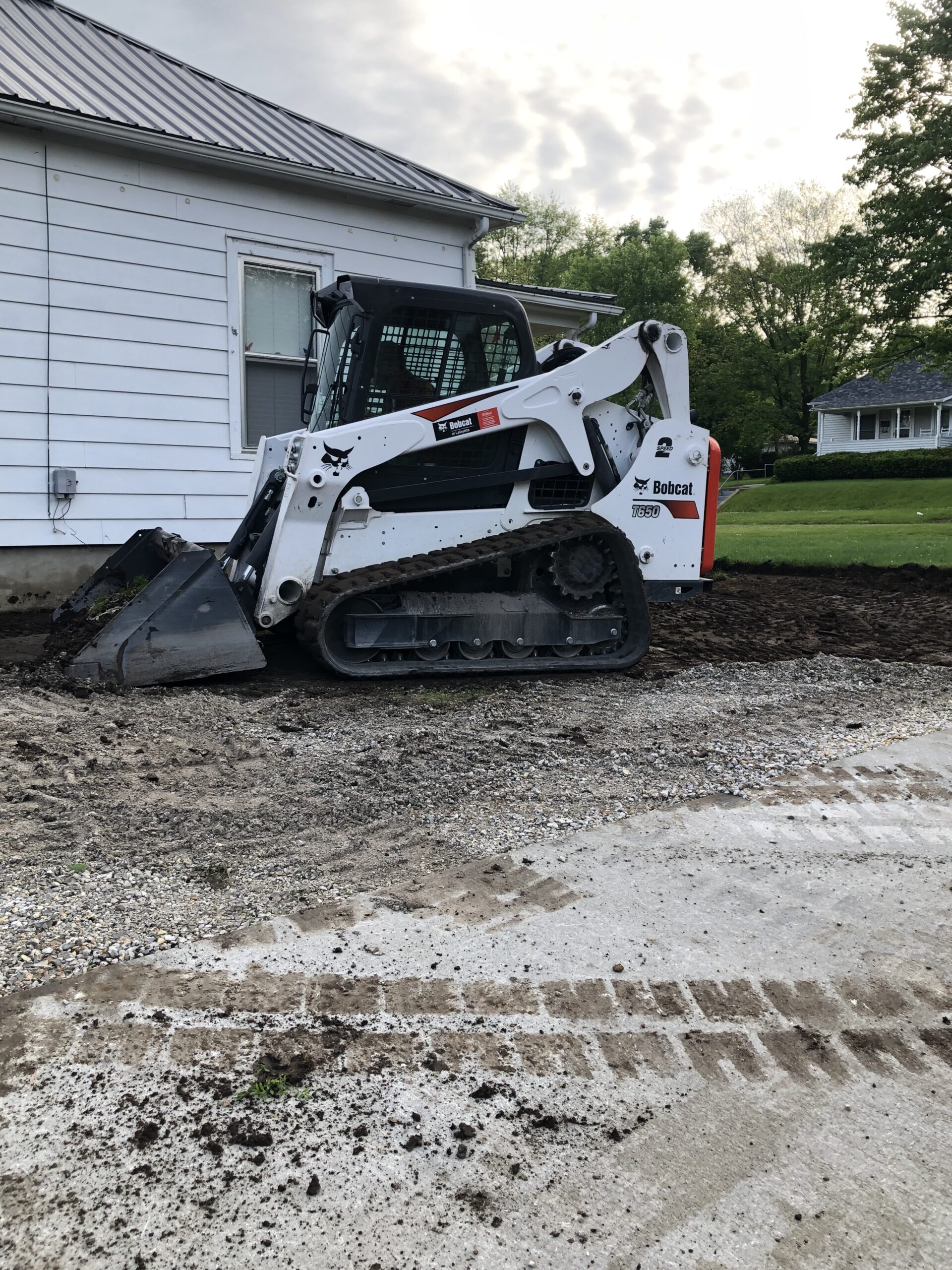

A successful construction or property improvement project begins below the finished surface. Before concrete is poured, gravel is spread, landscaping takes shape, or a building goes up, the ground has to be ready. Experienced Dirt Work Specialists understand how excavation, grading, drainage, compaction, and material placement work together to create that starting point.
For homeowners and small businesses in Attica, IN, overlooking the groundwork can turn into standing water, settling, erosion, uneven surfaces, or expensive corrections later. Dirt work isn’t simply about moving soil. It is about putting the right material in the right place, at the right elevation, for a specific purpose.
Smart Contractors provides dirt work, grading, Bobcat work, site preparation, drainage solutions, driveway preparation, and related services for residential and commercial projects in the Attica area.
Planning a project where the ground needs to be cleared, reshaped, excavated, or prepared? Schedule Your Free Assessment Today!
Let’s dive in…
Key Takeaways: Dirt Work Specialists
- Good dirt work starts with drainage, elevation, access, and the property’s intended use.
- Dirt Work Specialists prepare ground for construction rather than simply making it look level.
- Proper grading helps direct water away from buildings, drives, and other improvements.
- Compaction and material selection influence how well prepared areas perform over time.
- Attica’s varied terrain makes site-specific planning especially important.
- Excavation, grading, hauling, and drainage often need to work together.
- Early site evaluation can uncover problems before construction makes them harder to correct.
- Skilled equipment operation can reduce unnecessary disturbance to surrounding property.
Why Dirt Work Specialists Matter Before Construction Begins
There is a major difference between ground that looks ready and ground that has actually been prepared for what comes next. A building pad, gravel driveway, concrete area, lawn, parking area, or landscape project can each require a different combination of excavation, elevation control, drainage, material placement, and compaction.
One common challenge is starting construction before understanding how water moves across the property. A seemingly flat area can collect runoff during heavy rain. A slope that appears harmless can concentrate water along a driveway or building. Low spots can remain wet, while improperly placed fill may settle after other work has already been completed.
Those issues become harder to solve once structures and finished surfaces are in place.
Professional dirt work starts by looking beyond the immediate digging area. Where does water enter the site? Where should it leave? Is soil being removed, reused, or imported? Will equipment have enough access? What will the finished area support?
Those questions shape the excavation and grading plan.
Around Attica and Fountain County, terrain can change considerably from one property to another. Regional dirt-work providers specifically identify drainage, erosion, hillside work, waterways, and building pads among common Fountain County concerns. That makes a site-specific approach more useful than assuming every property needs the same treatment.
Smart Contractors offers rough grading, finish grading, Bobcat work, excavation and earthmoving, site preparation, and drainage-related work. Its published services also include preparation for homes, garages, barns, additions, driveways, parking lots, and commercial sites.
The practical benefit is coordination. Instead of thinking about clearing, digging, drainage, and final grade as unrelated jobs, they can be treated as parts of one site-preparation process.
For a homeowner, that may mean turning an uneven or poorly draining area into usable ground. For a small business, it may mean preparing a site so the next contractor can begin without first correcting preventable groundwork problems.
Good dirt work rarely gets much attention after a project is finished. That is exactly the point. When the elevations, drainage, base, and preparation are right, everything built above them has a better place to start.
What Professional Dirt Work Should Address on Your Property
Moving dirt is only one piece of professional earthmoving. The harder part is deciding where it should move, how much should move, and what conditions need to exist when the equipment leaves.
Several issues deserve attention before excavation begins:
- Existing grade and elevation. High and low areas influence runoff, accessibility, building placement, and the amount of material that may need to move. Simply flattening a site can redirect water somewhere it should not go.
- Drainage patterns. Water needs a planned route. Ditches, swales, culverts, slopes, and other drainage features may be needed depending on the property. Smart Contractors lists ditch, culvert, driveway, and drainage-feature construction or repair among its Bobcat capabilities.
- Soil and fill conditions. Not every material behaves the same under load or when saturated. Loose fill can settle, while wet soil can complicate grading and compaction. Site preparation should account for the purpose of the finished area rather than treating all dirt alike.
- Equipment access. Tight residential areas, existing structures, fences, landscaping, overhead obstacles, and narrow entrances can affect which machines make sense. Bigger equipment is not automatically better equipment.
- Future use. Ground being prepared for a lawn does not have the same requirements as a building pad, driveway, parking area, or concrete installation. The finished purpose should guide the preparation.
- Material movement. Excavation creates material that must go somewhere. Some can potentially be reused onsite; other material may need hauling or replacement. Planning this early keeps piles of spoil from becoming a second problem.
The consequence of ignoring these factors is often rework. A driveway may develop soft areas. Water can migrate toward a structure. A yard may hold water after storms. Construction schedules can slow because another trade arrives and discovers that elevations or access are not ready.
Experienced Dirt Work Specialists address those variables before they become buried problems. For Attica property owners, that planning can also make the transition from dirt work to concrete, gravel, landscaping, or construction far smoother.
Grading and Drainage: Where Good Dirt Work Proves Its Value
Water is one of the most important factors in site preparation. You cannot stop rain from falling on a property, but thoughtful grading can influence where that water travels once it reaches the ground.
That distinction matters.
Poor drainage may begin with something surprisingly small: an incorrect slope near a structure, a low spot beside a drive, compacted ground that sheds water differently than expected, or runoff concentrated into an area that cannot handle it. Over time, the symptoms can include ponding, rutting, erosion, washed-out material, muddy access, and stressed landscaping.
Fountain County’s topography adds another layer. Local excavation information describes portions of the county as hilly and emphasizes water management, erosion control, washout repair, culverts, waterways, and drainage as recurring dirt-work concerns. Historic Indiana soil reporting for Fountain County also documents both rolling and flatter ground and notes drainage needs in some local soils.
That does not mean every Attica property has a drainage problem. It means drainage should be evaluated rather than assumed.
Good grading works with the site. Operators need to establish elevations that support the project’s intended use while giving runoff a practical path. On one property, that could mean reshaping a yard. On another, it may involve driveway slopes, a ditch, a culvert, or preparation around a future building.
Smart Contractors provides rough and finish grading for construction, landscaping, driveways, and parking areas, along with excavation, earthmoving, and drainage-related Bobcat services. The company also lists dirt work, gravel driveways, hauling, concrete, landscaping, and material supply among its broader services.
Having related capabilities available can matter when a project crosses traditional trade boundaries. Dirt may need to be removed. Stone may need to come in. A driveway may require reshaping. A future concrete area may need proper subgrade preparation.
The goal is not merely a smooth-looking surface on completion day. It is ground shaped around how the property will actually function when Indiana weather puts the grade and drainage to the test.
Get Your Free Project Assessment
Choosing the Right Dirt Work Approach for Different Projects
No two dirt-work projects should automatically receive the same treatment. A backyard regrade, new driveway, commercial pad, building site, and landscape renovation may all involve moving soil, yet their preparation requirements can be substantially different.
Matching the work to the end use is essential.
- New construction and building sites: Site preparation may involve clearing, excavation, rough grading, material movement, drainage planning, and preparation for later foundation or concrete work. The challenge is maintaining the elevations required by the project while managing water and equipment access. Smart Contractors identifies site preparation for homes, garages, barns, additions, and commercial pads among its services.
- Driveways and access areas: A driveway must do more than provide a path across the property. Water needs somewhere to go, and the underlying surface needs to support traffic. Poor drainage or insufficient preparation can contribute to rutting, soft spots, displaced gravel, and repeated maintenance.
- Yard grading: Residential grading often involves subtle elevation changes rather than major excavation. The challenge is correcting drainage without creating a new low area somewhere else. Rough grading establishes the general shape; finish grading prepares the surface for the next phase.
- Commercial properties: Access, scheduling, drainage, parking areas, material staging, and coordination with other contractors can become more important. Dirt work should support the broader construction sequence rather than operating independently from it.
- Landscape renovations: Removing old features or reshaping a property can expose roots, debris, compacted soil, or unexpected elevation differences. Earthmoving should account for the future landscape rather than merely clearing what existed before.
- Drainage corrections: These projects require identifying the source and path of water before choosing a remedy. Filling the lowest spot without addressing why water reaches it may simply relocate or postpone the issue.
The common thread is purpose. Dirt Work Specialists should know what the site needs to accomplish after their work is finished.
For homeowners and businesses around Attica, IN, defining that purpose early also makes estimating more useful. The contractor can evaluate access, material requirements, excavation quantities, drainage concerns, and equipment needs around a clear finished objective instead of an open-ended request to “level things out.”

How Dirt Work Specialists Prepare a Site for Long-Term Use
A well-prepared site usually results from a sequence of decisions rather than one pass with a machine. Skipping an early step can create complications farther down the project.
The process commonly involves:
- Evaluate the property. The contractor needs to understand the intended project, existing elevations, visible drainage patterns, access points, surrounding structures, and potential obstacles.
- Define the finished condition. “Move this dirt” is not a finished condition. A usable building area, properly draining yard, prepared driveway, parking area, or landscape grade gives the work a measurable purpose.
- Plan clearing and excavation. Brush, debris, unwanted material, existing improvements, or unsuitable soil can interfere with earthmoving. Smart Contractors lists brush and debris clearing, excavation, grading, site preparation, and cleanup within its equipment services.
- Manage material intelligently. Excavated soil may need to be stockpiled, redistributed, hauled away, or replaced with another material. Coordinating hauling and material supply can prevent unnecessary handling.
- Establish rough grade. This creates the site’s broad elevations and contours. At this stage, operators are shaping the property around construction requirements and drainage.
- Prepare and compact appropriate areas. Areas supporting drives, structures, concrete, or other improvements need preparation suited to their eventual loads and materials. Improperly handled fill can become a settlement concern later.
- Complete finish grading. Once major earthmoving is complete, final shaping prepares the surface for landscaping, seeding, gravel, or the next construction phase.
- Review drainage and transitions. Finished elevations should connect logically with surrounding ground, entrances, structures, drives, and drainage paths.
A major challenge is sequencing. Bringing finish material onto a site too early can lead to it being disturbed again. Completing landscaping before heavy equipment work is done creates unnecessary restoration. Digging before access and spoil placement are planned can make the site harder to work.
That is why experienced earthmoving is as much about planning as machine operation.
Smart Contractors has served Attica and surrounding communities since 1995 and provides dirt work alongside Bobcat work, hauling, gravel driveway, concrete, landscaping, and material services. For projects requiring several phases, that range can help property owners think about the entire site rather than one isolated task.
What to Look for Before Hiring Dirt Work Specialists in Attica, IN
Price matters, but a dirt-work estimate makes more sense when you understand what is actually included. Two contractors can look at the same property and propose different scopes because they are solving different versions of the problem.
Before making a decision, focus on specifics:
- Ask what the finished grade will accomplish. A contractor should understand whether the priority is construction preparation, drainage, driveway performance, landscaping, or another outcome.
- Discuss drainage before digging starts. Ask where runoff currently travels and how the proposed work could change that path. This is especially important on sloped properties and around buildings.
- Clarify material assumptions. Find out whether the project requires imported fill, topsoil, gravel, stone, or removal of excess material. Material and hauling requirements can significantly affect scope and price.
- Talk about access. Identify gates, utilities, landscaping, neighboring property, overhead obstacles, pavement, septic areas, or other features that could restrict machinery.
- Understand rough versus finish grading. Rough grading establishes major elevations. Finish grading brings the surface closer to its final condition. Knowing which one is included prevents mismatched expectations.
- Ask what happens next. Dirt work rarely exists in isolation. If concrete, gravel, landscaping, utilities, or construction follows, the earthmoving should leave the site ready for that next phase.
- Request a site-specific assessment. Photos and measurements can help, but complex grading, drainage, and excavation projects often benefit from seeing the property and understanding the surrounding terrain.
Local presence is useful here. Smart Contractors is based at 3394 N US Hwy 41 in Attica and lists Attica, Covington, Veedersburg, Williamsport, Lafayette, West Lafayette, and other surrounding communities among the areas it serves.
The company’s dirt-work capabilities include rough and finish grading, while its Bobcat services cover grading, leveling, excavation, earthmoving, site and driveway preparation, clearing, and drainage work.
For a homeowner, the right scope can mean turning troublesome ground into a usable part of the property. For a business, it can mean handing the next contractor a site that is accessible and appropriately prepared.
Either way, compare contractors based on what they plan to accomplish—not simply how much dirt they promise to move.
Frequently Asked Questions
Q: What do Dirt Work Specialists typically do?
A: Dirt Work Specialists handle work such as excavation, earthmoving, rough and finish grading, site preparation, drainage corrections, clearing, driveway preparation, and material movement. The exact scope depends on the property’s conditions and intended use.
Q: How much does dirt work cost in Attica, IN?
A: Pricing varies with excavation volume, equipment requirements, site access, soil conditions, grading complexity, hauling, materials, drainage work, and project size. A site assessment provides a more meaningful estimate than a generic per-hour or per-load figure.
Q: Can Dirt Work Specialists fix standing water in my yard?
A: Grading and drainage improvements may help when elevation or runoff contributes to standing water. The cause should be identified first because drainage problems can involve slopes, soil, downspouts, ditches, culverts, or neighboring runoff.
Q: Is my property too tight for excavation equipment?
A: Not necessarily. Equipment choice depends on gates, buildings, landscaping, utilities, slopes, and maneuvering room. Compact equipment such as Bobcat machines can be useful where larger earthmoving equipment would cause unnecessary disturbance.
Q: Do you provide dirt work for homes and businesses in Attica, IN?
A: Yes. Smart Contractors advertises residential and commercial services in Attica and surrounding communities, including grading, excavation, earthmoving, site preparation, driveway preparation, and drainage-related work.
Q: Is professional dirt work worth paying for before a concrete or building project?
A: Proper site preparation can reduce avoidable problems involving drainage, unsuitable elevations, access, and unstable or poorly prepared areas. The appropriate preparation depends on what will ultimately be constructed on the site.
Q: Can dirt work and driveway preparation be completed together?
A: Often, yes. Site grading, drainage, material movement, and driveway preparation are closely related. Coordinating them can reduce repeated equipment mobilization and help ensure the driveway fits the property’s final elevations and runoff plan.
Q: What should I do before scheduling dirt work?
A: Know the project’s intended outcome and identify obvious access restrictions, utilities, drainage concerns, property boundaries, and future construction areas. A contractor can then evaluate the site and determine the equipment, materials, and sequence needed.
Build the Rest of Your Project on Better Ground
Choosing experienced Dirt Work Specialists is about much more than getting soil moved quickly. The real objective is creating ground that serves the next stage of your property—whether that means construction, a driveway, improved drainage, new landscaping, concrete work, or a more functional yard.
For homeowners and small businesses in Attica, IN, thoughtful site preparation can turn difficult terrain into usable space while addressing grading and drainage concerns before finished improvements make corrections more disruptive.
Smart Contractors provides dirt work supported by related excavation, Bobcat, hauling, driveway, concrete, landscaping, and material capabilities. That makes it possible to evaluate the groundwork in the context of what the property ultimately needs to become.
The first step is understanding the site. Take advantage of the Free Project Assessment to discuss your property, intended project, access, grading concerns, drainage, and next construction phase.
0 comments